
The History of Boxing: From Bare-Knuckle Fights to the Modern Era
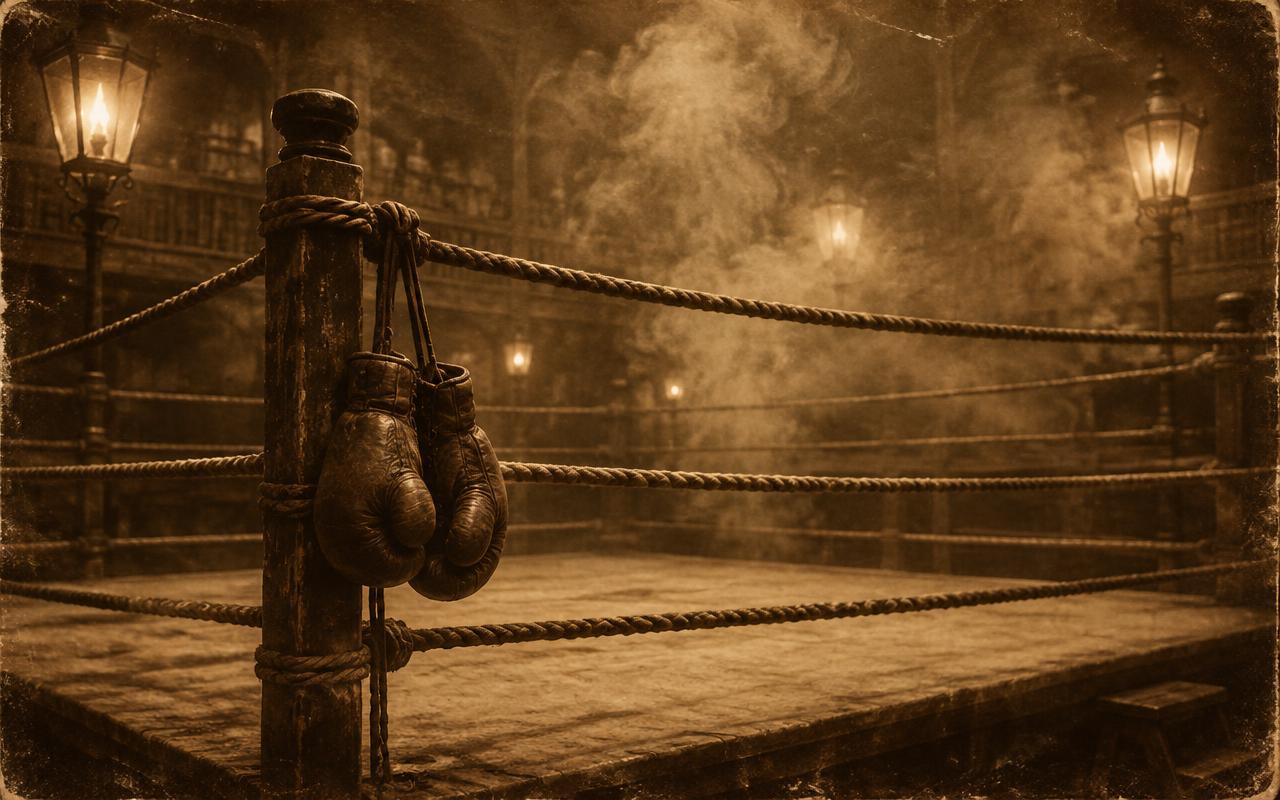
Boxing is one of the oldest sports there is, and Britain did more than most to shape it. Over a few centuries it went from bloody back-room prizefights to sold-out stadium nights with four world title belts on the line. Here's how it happened: the rules, the gloves, the divisions and the organisations behind the sport today.
Ancient roots
Fist-fighting contests appear in art from the ancient world, and boxing was part of the ancient Greek Olympic Games. Greek fighters wrapped their hands in leather thongs. The Romans later used far more brutal versions. These early forms had little in common with modern boxing beyond the basic idea of hitting each other.
Bare-knuckle Britain
Modern boxing grew out of prizefighting in 18th-century England, where fighters battled with bare fists for money and wagers. James Figg is often described as the first recognised English champion in the early 1700s. He ran an academy in London teaching fencing and fist-fighting.
Broughton's rules (1743)
Jack Broughton, a champion of the era, drew up the first known written rules in 1743. A round ended when a man went down. He then had 30 seconds to get back to the centre of the ring, or he lost. Hitting a downed opponent was banned. Broughton is also credited with promoting padded "mufflers" for sparring, the ancestors of the boxing glove, though real fights stayed bare-knuckle.
The London Prize Ring Rules (1838)
These rules updated Broughton's code. They introduced a roped ring and banned head-butting, gouging, kicking and low blows. Fights could still go on for dozens of rounds and hours, since a round only ended with a knockdown.
The Marquess of Queensberry rules (1867)
The Queensberry rules were written by Welsh sportsman John Graham Chambers and published in 1867 under the patronage of John Sholto Douglas, the 9th Marquess of Queensberry. Hence the name. They form the foundation of the modern sport:
- Fighters wear padded gloves.
- Rounds last three minutes, with one minute's rest in between.
- A downed fighter has ten seconds to get up unaided, or he loses by knockout.
- Wrestling holds and throws are banned.
Bare-knuckle and gloved boxing ran side by side for a while. The turning point is usually dated to 1892, when "Gentleman Jim" Corbett beat John L. Sullivan in New Orleans for the heavyweight championship. Sullivan was the last bare-knuckle heavyweight champion, and this was a gloved fight under Queensberry rules. After that, gloved boxing became the standard for championship fights.
Weight divisions
Early prizefights often had no weight limits, so the biggest man usually won. Weight classes developed from the late 19th century to make fights fairer. The traditional "original eight" divisions were flyweight, bantamweight, featherweight, lightweight, welterweight, middleweight, light heavyweight and heavyweight. Many more have been added since. Professional boxing now commonly recognises 17 divisions, from minimumweight up to heavyweight, including newer classes like cruiserweight.
| Division | Notes |
|---|---|
| Flyweight | The lightest of the classic eight |
| Bantamweight | One step up from flyweight |
| Featherweight | Long-established classic division |
| Lightweight | Home to many all-time greats |
| Welterweight | Often seen as a glamour division |
| Middleweight | A classic championship weight |
| Light heavyweight | Introduced in the early 1900s |
| Heavyweight | No upper limit — the sport's marquee division |
Exact weight limits differ slightly between amateur and professional boxing and have changed over time, so we haven't listed them here. Check the relevant governing body for current limits.
Amateur boxing and the Olympics
Boxing joined the modern Olympic Games in 1904 in St Louis, and it has been at almost every Games since. Women's boxing was added at London 2012. Many great professionals started with Olympic medals, including Muhammad Ali (1960, as Cassius Clay), George Foreman (1968), Lennox Lewis (1988, for Canada) and Anthony Joshua (2012).
Regulators and the "alphabet" belts
In Britain, the British Boxing Board of Control was formed in 1929 to regulate professional boxing, and it still licenses boxers and oversees British title fights. Internationally, several sanctioning bodies award world titles, which explains why one division can have several world champions at once:
| Body | Origins |
|---|---|
| WBA — World Boxing Association | Grew out of the US National Boxing Association (1921); renamed WBA in 1962 |
| WBC — World Boxing Council | Founded 1963 |
| IBF — International Boxing Federation | Founded 1983 |
| WBO — World Boxing Organization | Founded 1988 |
A boxer holding all four major belts in one division is called "undisputed". Fans have their own idea too: the "lineal" champion, the man who beat the man. Purists argue that's the real title.
Modern changes
- Shorter fights: world title bouts moved from 15 rounds to 12 during the 1980s, for safety reasons.
- Medical safety: pre-fight medicals, mandatory brain scans in many jurisdictions and ringside doctors are now standard.
- Scoring: the ten-point must system, scored by three judges, is the norm in professional boxing.
- Broadcasting: pay-per-view TV and streaming have made big fights global events, often held in stadiums.
- Women's boxing: now a professional sport in its own right, with undisputed champions and headline events.
Ringside today
From Figg's London amphitheatre to stadium fight nights, the appeal hasn't changed: two people, a ring, and nowhere to hide. If you fancy seeing it live, our boxing tickets page covers upcoming fight nights. For the big men, read our piece on the greatest heavyweight champions.
Frequently asked questions
What are the Queensberry rules?
Published in 1867, they require gloves, three-minute rounds with one-minute rests and a ten-second count for knockdowns — the basis of modern boxing.
Who was the last bare-knuckle heavyweight champion?
John L. Sullivan, who lost the title to James J. Corbett in a gloved fight in 1892.
Why are there several world champions in one division?
Because several sanctioning bodies — mainly the WBA, WBC, IBF and WBO — each award their own world titles.
When did boxing join the Olympics?
Men's boxing joined the modern Olympics in 1904; women's boxing was added in 2012.
Sources and further reading
Fancy seeing it live? Tickets and packages are subject to availability and confirmation in your written quote. We don't arrange flights.