Real Madrid History: The Kings of European Football
Fifteen European Cups. Read that again. Real Madrid are the most successful club in the history of European football, and they have a knack for winning when they're second-best for most of the game. Here's the story, from a group of Madrid enthusiasts in 1902 to Di Stéfano, the Galácticos, Ronaldo and the rebuilt Bernabéu. We're not affiliated with the club.
The early years (1902–1940s)
Madrid Football Club was officially founded on 6 March 1902. In 1920 King Alfonso XIII granted the royal title, so the club became "Real" (royal) Madrid and added the crown to its badge. Madrid were founder members of La Liga in 1929 and won their first league titles in the early 1930s.
Santiago Bernabéu, a former player, became club president in 1943 and transformed the club. He built a huge new stadium, which opened in 1947 and was later named after him. He also set out to bring the world's best players to Madrid.
Di Stéfano and five in a row
Alfredo Di Stéfano joined in 1953 after a famous transfer tussle with Barcelona. With Ferenc Puskás, Francisco Gento and Raymond Kopa, Real won the first five European Cups, from 1956 to 1960. The 1960 final, a 7-3 win over Eintracht Frankfurt at Hampden Park, is often called one of the greatest matches ever played. Gento went on to win a record six European Cups as a player, including a sixth for the club in 1966.
Domestic dominance
Through the 1960s, 1970s and 1980s, Real Madrid were a dominant force in La Liga. The "Quinta del Buitre" ("Vulture's Cohort") side, led by Emilio Butragueño, won five league titles in a row from 1986 to 1990. Europe was harder: the club waited 32 years for a seventh European Cup.
La Séptima and the Galácticos
Real finally won the Champions League again in 1998, beating Juventus 1-0 in Amsterdam with a goal from Predrag Mijatović. They won again in 2000 against Valencia. In 2002 Zinedine Zidane scored an extraordinary volley in the final against Bayer Leverkusen at Hampden Park.
That Zidane goal came at the height of the Galácticos era. President Florentino Pérez signed one superstar a year: Luís Figo, Zidane, Ronaldo (the Brazilian) and David Beckham, alongside homegrown heroes like Raúl and Iker Casillas. They were thrilling to watch and won La Liga titles, but they couldn't add more European titles after 2002.
Cristiano Ronaldo and the modern dynasty
Cristiano Ronaldo arrived from Manchester United in 2009 and became the club's all-time record goalscorer. In 2014 in Lisbon, Sergio Ramos headed a stoppage-time equaliser against Atlético Madrid and Real won 4-1 after extra time. It brought the long-awaited tenth title, "La Décima".
Three in a row
Under Zinedine Zidane as coach, Real won the Champions League three times in a row, in 2016, 2017 and 2018. It was the first hat-trick in the Champions League era. Luka Modrić, Toni Kroos and Casemiro ran the midfield; Ramos and Marcelo were key figures too.
Carlo Ancelotti and more comebacks
Ancelotti, who won La Décima in 2014, came back and won the Champions League again in 2022. That run included late comebacks against PSG, Chelsea and Manchester City before a 1-0 final win over Liverpool. In 2024 they beat Borussia Dortmund 2-0 at Wembley for title number 15. Our piece on Real Madrid's greatest Champions League comebacks goes into the drama.
Real Madrid legends
- Alfredo Di Stéfano — the heart of the five-in-a-row team.
- Francisco Gento — record six European Cups as a player.
- Raúl — club captain and long-time record scorer before Ronaldo.
- Iker Casillas — goalkeeper and captain across two eras.
- Zinedine Zidane — scored the 2002 final volley, then coached three titles in a row.
- Cristiano Ronaldo — the club's all-time top scorer.
- Sergio Ramos — the defender with a habit of scoring the goals that matter.
- Luka Modrić — 2018 Ballon d'Or winner and midfield metronome.
Rivalries
"El Clásico" against Barcelona is one of the most-watched club matches in the world, and it carries political and cultural history as well as football. The Madrid derby with Atlético is a city rivalry with its own edge, sharpened by the 2014 and 2016 Champions League finals, both won by Real.
Real Madrid timeline
| Year | Milestone |
|---|---|
| 1902 | Madrid Football Club founded |
| 1920 | Royal title granted; becomes Real Madrid |
| 1947 | New stadium opens, later named the Santiago Bernabéu |
| 1956–1960 | Five consecutive European Cups |
| 1966 | Sixth European Cup |
| 1998 | Seventh European title, 'La Séptima' |
| 2002 | Zidane's volley wins the ninth |
| 2014 | La Décima in Lisbon |
| 2016–2018 | Three Champions League titles in a row |
| 2024 | 15th European title at Wembley |
Football in Madrid
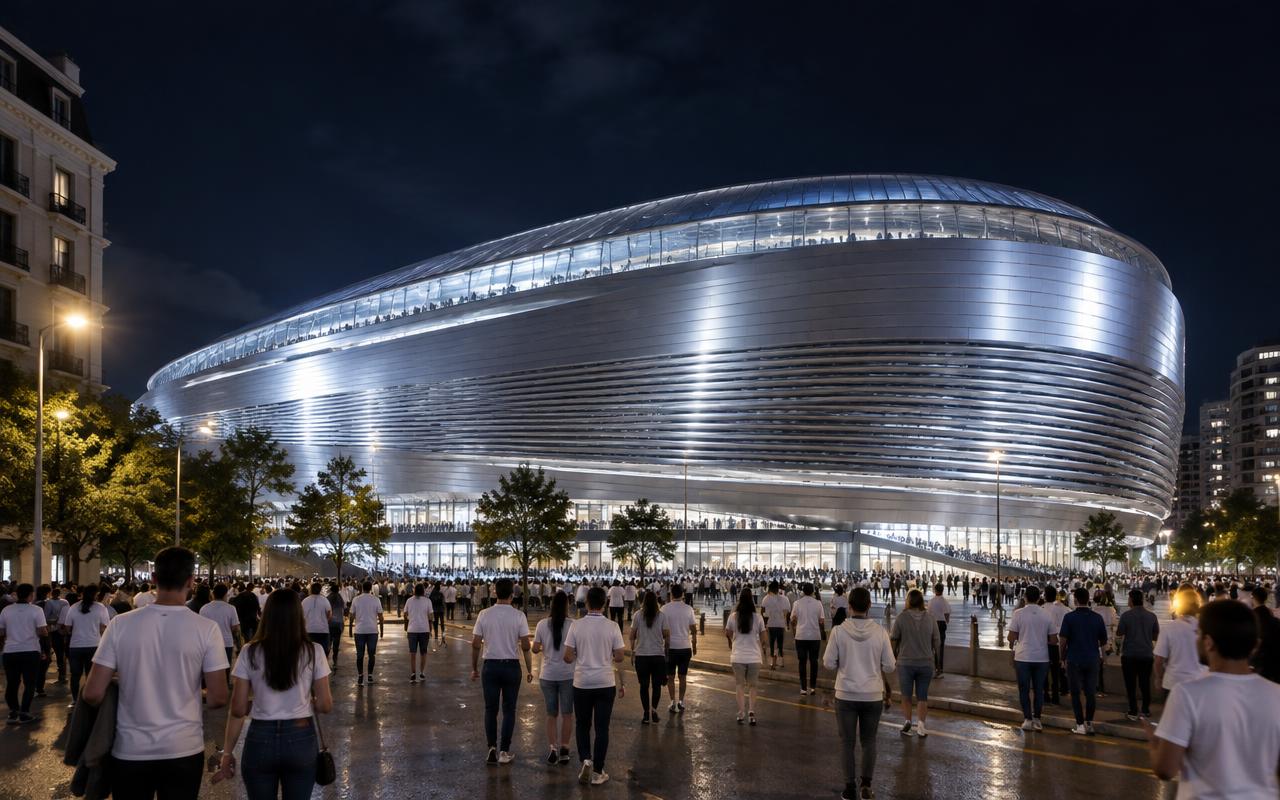
The newly renovated Bernabéu, with its steel skin and retractable roof, sits right in the city on Paseo de la Castellana, and it's easy to reach by metro. Kick-offs are often late by British standards, so dinner in Madrid tends to happen after the match. Throw in tapas, the Prado and sunshine and it's an easy sell for the group chat. See our Real Madrid trips page, Champions League and European getaways. Tickets and hotels are subject to availability and your written quote; flights aren't something we arrange.
Frequently asked questions
When was Real Madrid founded?
Officially on 6 March 1902, as Madrid Football Club.
How many European Cups have Real Madrid won?
Fifteen, a record, the most recent in 2024.
Why is it called 'Real' Madrid?
King Alfonso XIII granted the club a royal title in 1920; 'Real' means royal.
Who is Real Madrid's top scorer?
Cristiano Ronaldo, who scored more than 450 goals for the club between 2009 and 2018.
Sources and further reading
Fancy seeing it live? Tickets and packages are subject to availability and confirmation in your written quote. We don't arrange flights.