The History of the Football League: How the EFL Got Here
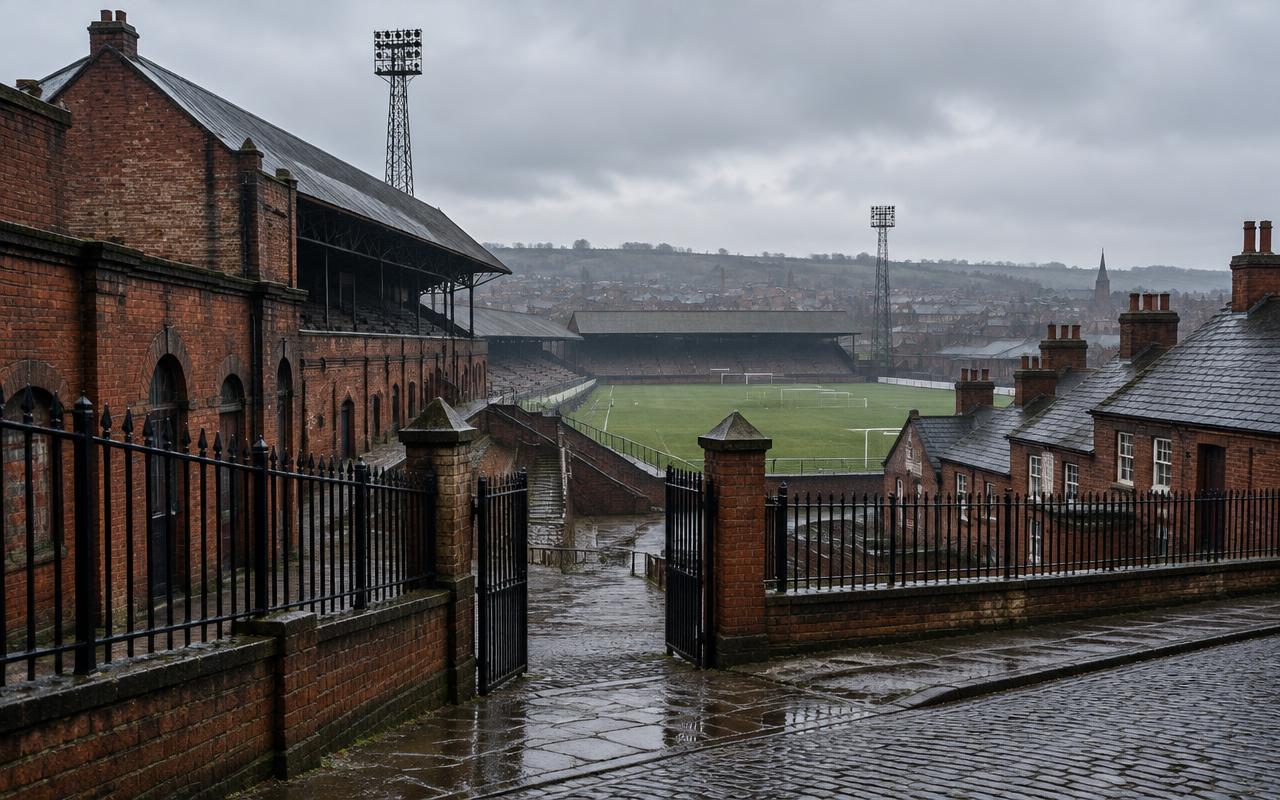
Before the Football League, clubs made their fixtures up as they went along. A director from Aston Villa got fed up with it, called a meeting, and invented an organised national competition. That's genuinely how it started — and the league he founded still exists today, three divisions deep, calling itself the EFL. Here's the whole journey from 1888 to the present.
1888: William McGregor's idea
The Football League was founded in 1888, principally through William McGregor, an Aston Villa director. His complaint was a practical one: clubs depended on cup ties and ad hoc friendlies for income, which meant a bad run could leave a ground half-empty and a wage bill unpaid. What he wanted was reliable, fixed home-and-away fixtures against a known set of opponents.
It sounds dull now. In 1888 it was a revolution, and every league in world football is a descendant of it.
The twelve founding clubs
The original League had twelve members: Accrington, Aston Villa, Blackburn Rovers, Bolton Wanderers, Burnley, Derby County, Everton, Notts County, Preston North End, Stoke, West Bromwich Albion, Wolverhampton Wanderers. Some of those names are still at the top of the game. One — Notts County — is now far down the pyramid, which is a decent summary of what a hundred and thirty-odd years of promotion and relegation does.
The format was one division, twelve clubs, playing each other home and away. That's 22 matches a season, with two points for a win. Compare that to a modern season and the difference is almost entirely about how much football a club can physically absorb.
The first champions
Preston North End won the first championship in 1888–89 without losing a match. They went through the whole 22-game season unbeaten, which earned them the nickname "The Invincibles" — a title Arsenal later borrowed for a season that was a great deal longer.
How promotion and relegation grew
Nothing about the modern pyramid existed at the start. Promotion and relegation were worked out over about a decade, and the early method was oddly tentative.
| Date | What changed |
|---|---|
| 1892 | A Second Division was created |
| 1892–93 | Test matches between divisions decided who belonged where — promotion wasn't automatic |
| 1898–99 | Automatic promotion and relegation replaced test matches |
| 1920 | A Third Division was added, drawing on Southern League clubs |
| 1921 | A northern section created Third Division North and South |
| 1958 | The regional third tier was reorganised into national Third and Fourth Divisions |
| 1992 | The twenty-two top-flight clubs broke away to form the Premier League |
| 2004 | Divisions were rebranded the Championship, League One and League Two |
| 2016–17 | The organisation took on the public name English Football League, or EFL |
The test-match era is the strangest part. For most of the 1890s, whether you went up or down was settled by end-of-season play-off style matches between divisions rather than by your finishing position alone. Automatic promotion and relegation only arrived in 1898–99.
1992: the top tier walks out
The defining moment of the modern era was 1992, when the twenty-two clubs of the old First Division left to form the Premier League. The Football League carried on underneath, and immediately became something different — no longer the top of English football, but the body running the three divisions below it.
That's also why the naming gets confusing for anyone who didn't grow up with it. The old Second Division became the Football League's First Division, which ran until 2004, when it was renamed the Championship. So "the old First Division" and "the old Football League First Division" mean two different things depending on which decade you're talking about.
What it looks like today
- Seventy-two clubs, split across the Championship, League One and League Two — twenty-four in each.
- Those three divisions sit at levels two, three and four of the English pyramid, below the Premier League.
- The EFL describes itself as "the world's original league football competition", which is one of the few accurate pieces of marketing in football.
- In the Championship, the top two go up automatically and the play-offs decide the third promotion place.
One change worth knowing about, because it affects anyone planning to watch: from the 2026–27 season the Championship play-offs expand to six teams, covering places third to eighth. Third and fourth go straight into the two-legged semi-finals, while fifth to eighth play single-leg eliminators first. The final stays at Wembley. We haven't seen the same change confirmed for League One and League Two, so don't assume it applies there.
Records that still stand
| Record | Detail |
|---|---|
| Most old First Division titles | Liverpool, with 18 — won before the Premier League began in 1992 |
| Largest Football League attendance | 83,260 — Manchester United v Arsenal, 17 January 1948 |
That attendance figure has a reason behind it. The match was played at Maine Road, Manchester City's ground, because Old Trafford had suffered wartime damage and United were still sharing. It ended 1–1.
Worth flagging on the Liverpool point: eighteen is their old First Division tally specifically. Combined totals that fold in the Premier League eras count differently, and mixing the two is how arguments start.
Going to an EFL match
Lower-league grounds are one of the best-value days out in football — close to the pitch, cheap pies, and a proper local atmosphere. We arrange football days and trips for groups across the divisions, and availability depends on fixtures and what's released. Have a look at our EFL page and our football hub for what we cover, or send us your group size through our contact page and we'll come back with options.
Frequently asked questions
When was the Football League founded?
1888, principally through William McGregor, an Aston Villa director who wanted reliable home-and-away fixtures.
Who were the founding members?
Twelve clubs: Accrington, Aston Villa, Blackburn Rovers, Bolton Wanderers, Burnley, Derby County, Everton, Notts County, Preston North End, Stoke, West Bromwich Albion and Wolverhampton Wanderers.
Who won the first Football League title?
Preston North End in 1888–89, unbeaten across the whole 22-match season.
How many clubs are in the EFL?
Seventy-two, with twenty-four each in the Championship, League One and League Two.
What changed about the Championship play-offs?
From 2026–27 they expand to six teams, covering places third to eighth, with fifth to eighth playing single-leg eliminators first.
What is the biggest Football League crowd?
83,260, for Manchester United v Arsenal at Maine Road on 17 January 1948. The match finished 1–1.
Sources and further reading
- Football League First Division — foundation and members
- English Football League — history
- Football League test matches and the move to automatic promotion
- EFL Championship play-offs — expansion to six teams
- BBC Sport — how the Football League began
- FL125 — league attendance records
- Guinness World Records — largest attendance at a top-flight English match
All tickets, accommodation and activities are subject to availability and confirmation in your written quote. We don't arrange flights.